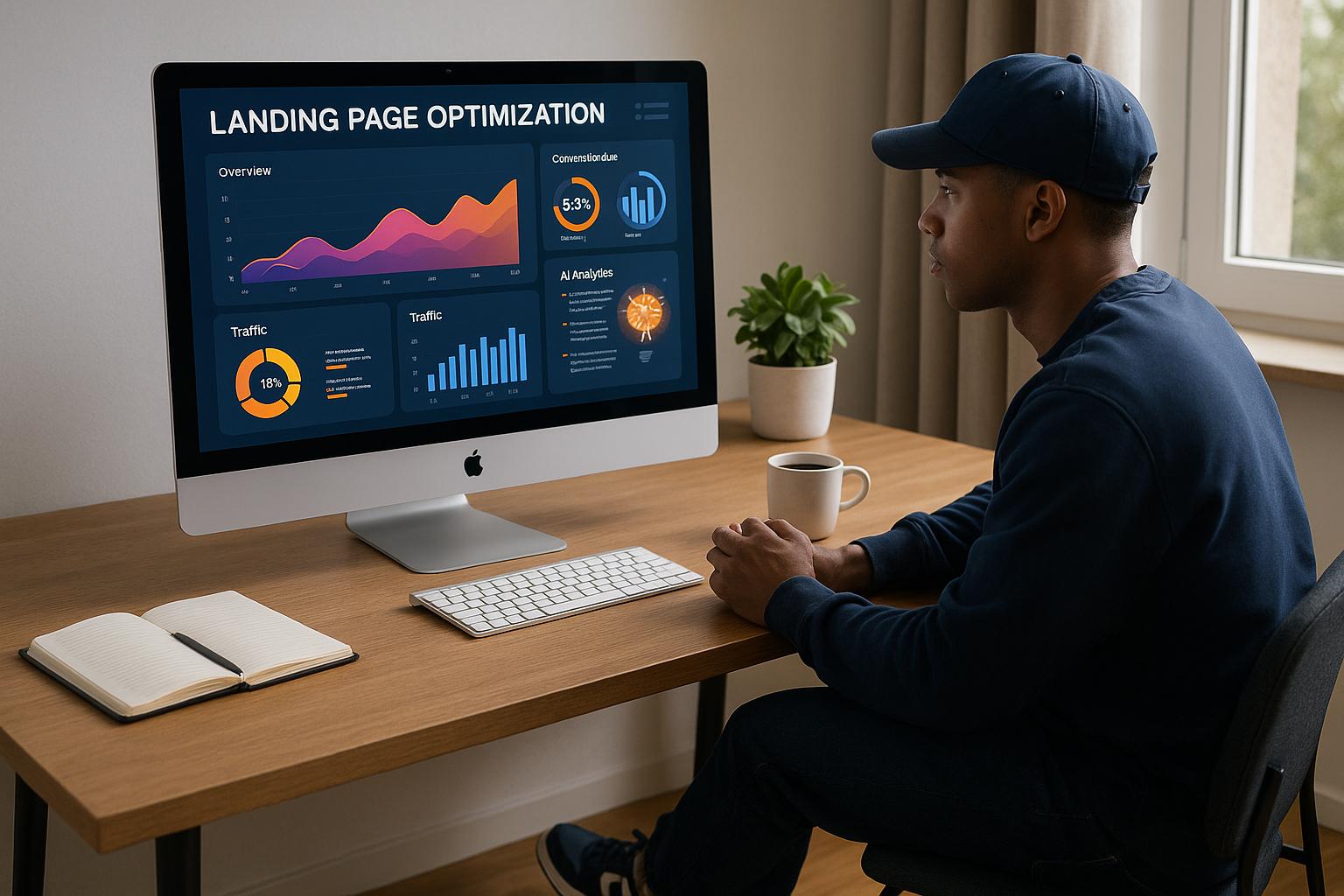
AI is transforming marketing by turning massive data into actionable insights, saving time, and boosting efficiency. Here’s what you need to know:
- Why It Matters: 69.1% of marketers already use AI, and the global AI market is growing at 33% annually. AI helps identify trends, predict customer behavior, and optimize campaigns faster than traditional methods.
- Key Benefits:
- Saves over 11.4 hours per week by automating tasks.
- Increases marketing productivity by 5–15%, adding up to $460 billion annually.
- Improves customer segmentation and personalization.
- Challenges:
- 43% of marketers struggle to maximize AI’s potential.
- Issues with data quality, privacy, and turning insights into action persist.
- Growth Areas:
- AI in marketing is projected to grow from $47.32 billion in 2025 to $107.5 billion by 2028.
- High adoption in personalization, predictive analytics, and campaign optimization.
If you’re not using AI, you’re falling behind. Start small with tools for analytics, segmentation, or content creation, and expand as you see results. AI isn’t just about efficiency – it’s about staying competitive.
The AI Marketing Stack: How Smart Companies Use AI to Drive Growth
Understanding AI Market Data
The AI marketing landscape is growing at an impressive pace. By 2025, the industry is expected to be worth $47.32 billion, with projections suggesting it will hit $107.5 billion by 2028, reflecting an annual growth rate of 36.6%. Meanwhile, the broader generative AI market is predicted to expand from $62.75 billion in 2025 to a staggering $356.05 billion by 2030, growing at a 41.52% annual rate. These numbers highlight a major shift in how businesses are approaching marketing strategies, with AI becoming a central component.
These figures aren’t just impressive – they’re actionable. They can guide budget planning and help make the case for leadership to invest in AI as a competitive edge. The data lays the groundwork for understanding key metrics that can shape strategic decisions.
Key Metrics in AI Market Data
Certain data points stand out as essential for marketers considering AI adoption. For starters, the global AI market is expanding at a yearly rate of 33%, showing how quickly the technology is moving from experimental to indispensable.
Adoption trends reinforce this shift. Currently, 88% of marketers use AI daily, 92% of businesses plan to invest in AI soon, and 50% of companies have already implemented it, while 43% are still testing the waters. Among larger enterprises, adoption is even more pronounced: 92% of Fortune 500 companies have implemented generative AI, and close to 90% of Fortune 1000 companies are ramping up their AI investments. This creates competitive pressure on smaller and mid-sized businesses to keep up.
One of AI’s most measurable benefits is its impact on productivity. Marketing teams using generative AI save an average of 11.4 hours per week by automating routine tasks, with 71% of marketers reporting increased productivity. Additionally, 93% of marketers use AI to speed up content creation, 81% to uncover insights, and 90% to make quicker decisions. By 2029, generative AI is expected to improve marketing productivity by over 40%, potentially adding $460 billion in annual value.
AI applications vary across industries. For example, customer service leads with a 56% adoption rate. In marketing, ad targeting is a primary focus for 50% of top performance agencies, while 51% of digital marketers use generative AI to enhance website and social media content. Machine learning is also widely used, with 74% of leading agencies leveraging it to analyze data signals and better understand consumer behavior.
AI is also reshaping workforce roles. Businesses using AI in marketing are expected to shift 75% of their staff’s focus from production tasks to more strategic activities. For example, 50% of top performance agencies have already redirected 30% of their time to strategy, reflecting how marketing teams are evolving in an AI-driven world.
These metrics provide a clear picture of AI’s growing influence, setting the stage for actionable insights based on market share data.
Using Market Share Data for Decisions
Market share data becomes a powerful tool when linked to your business goals. AI enables marketers to analyze customer data, uncover trends, and connect these insights to actionable strategies. This approach bridges the gap between raw data and decision-making.
For instance, regional revenue analysis can reveal areas where your campaigns perform better, helping you focus efforts on high-potential markets. Similarly, comparing your AI adoption rates to industry benchmarks – like the fact that 85% of executives believe AI is essential for maintaining a competitive edge – can highlight opportunities for improvement if your organization is lagging.
AI also revolutionizes customer segmentation. Machine learning goes beyond basic demographics by incorporating behavioral, contextual, and psychographic data. This results in more personalized messaging and higher engagement. AI tools analyze browsing habits, purchase history, and social media activity, providing a complete view of the customer. When paired with campaign management systems, these insights allow for precise targeting of high-value or at-risk customers.
Dynamic pricing in e-commerce offers another example of AI’s real-time capabilities. By analyzing market demand, competitor pricing, and customer behavior, AI can adjust pricing strategies almost instantly. This agility ensures businesses can respond to market changes within hours, capturing opportunities that slower methods might miss.
Predictive trend analysis is yet another advantage. AI helps forecast customer behavior and market shifts, enabling marketers to stay ahead of trends and adjust strategies on the fly. However, the quality of these insights depends on the quality of the data. Poorly structured or biased data can lead to flawed conclusions and missed opportunities, making clean and reliable data a top priority.
Finally, knowledge gaps within organizations can hinder AI adoption. With 43% of marketers unsure how to maximize AI’s value and 39% uncertain about using generative AI safely, investing in training programs is essential. Educating teams on how to interpret data and apply insights effectively is critical for successful AI integration. Empowered teams are better equipped to turn data into decisions that drive results.
How to Integrate AI Insights into Marketing Plans
Building on the earlier discussion of AI market data, the next step is turning those insights into actionable strategies. The real challenge isn’t just gathering data – it’s creating systems that transform these insights into marketing decisions that deliver results. With AI becoming more common, the focus now shifts to integrating it effectively into marketing efforts. Here’s how you can bridge the gap between raw data and impactful marketing strategies.
Creating a Centralized Dashboard for AI Data
Scattered data can make decision-making unnecessarily complicated. A centralized dashboard solves this problem by bringing all your AI-driven insights into one place. No more bouncing between analytics platforms, customer relationship management (CRM) systems, and AI tools.
An effective dashboard should include key elements like real-time campaign performance analytics, customer segmentation data, predictive analytics for trend forecasting, and competitive intelligence metrics. Together, these components provide a comprehensive view of your marketing landscape.
The first step is to prioritize which data sources to integrate based on your business goals. For instance, if personalization is your priority, start by incorporating customer behavior data and segmentation insights. If your focus is on campaign efficiency, performance metrics should take center stage. The idea is to align your dashboard setup with your strategic goals instead of trying to track everything at once.
Rather than overwhelming your team with too many tools, begin with a few AI-powered solutions that complement each other. This approach minimizes data fragmentation and simplifies the learning curve. Once your team is comfortable, you can gradually expand the dashboard to include more data sources and metrics.
Take Amazon as an example. The company uses centralized AI insights to power cross-selling and upselling, which accounts for up to 35% of its revenue. While most businesses don’t operate on Amazon‘s scale, the principle is universal: having consolidated data leads to faster and more accurate decisions.
With your data unified, the next step is transforming these insights into strategies that resonate with your audience.
Turning AI Insights into Customer-Focused Strategies
Data alone doesn’t drive results – it’s the strategies built from that data that make the difference. Start by using AI to create detailed, data-driven buyer personas. These personas go beyond basic demographics, incorporating behavioral, contextual, and psychographic insights. The result? Profiles that reflect real customer behavior, not just assumptions.
Once you’ve built these personas, align them with specific customer pain points and preferences. For example, if AI suggests a particular segment engages more with personalized email content than social media, focus your efforts on email campaigns for that group. This targeted approach is far more effective than spreading resources thinly across all channels.
AI tools can analyze everything from browsing habits and purchase history to social media activity, offering a 360-degree view of your customers. This holistic perspective helps you understand not just what customers do, but why they do it. These insights form the foundation for messaging strategies tailored to each segment’s unique needs.
Currently, 44% of companies use AI for customer segmentation, while 42% leverage it for personalization. These two functions are deeply connected – segmentation identifies your audience, and personalization determines how to communicate with them.
Integrating these insights with campaign management tools allows for quick execution. For instance, if your AI system identifies a high-value segment showing increased purchase intent, your campaign management platform can immediately deploy relevant messaging to capitalize on the opportunity.
Coca-Cola provides a great example of this in action. The company uses AI-powered market research to guide both product development and marketing strategies. By analyzing social media sentiment and consumer feedback, they identify trends like emerging flavor preferences. This data-driven approach enables them to create campaigns that genuinely connect with their audience.
While AI can handle the heavy lifting of data analysis, human creativity remains essential. AI tells you what resonates with customers, but it’s human ingenuity that makes the messaging memorable.
Once your strategies are customer-focused, the next step is adapting them to fit regional and industry-specific contexts.
Adjusting Strategies for Regional and Industry Differences
AI adoption varies widely across regions and industries, so a one-size-fits-all approach won’t cut it. Tailoring your strategies to these differences ensures your AI investments align with local realities.
Regional adoption rates differ significantly. For example, North America and Latin America are ahead in AI adoption, while Europe lags behind. In high-adoption regions like North America, you can confidently implement advanced AI-driven personalization and automation. In regions with lower adoption, like Europe, the focus should be on building trust and educating audiences about the benefits of AI before rolling out complex strategies.
Preferences for AI applications also vary by region. In Latin America, 63% of marketers prioritize AI for personalization, compared to 62% in Asia-Pacific and 60% in North America. This suggests that Latin American markets might be more receptive to personalized experiences, while other regions may favor different AI uses.
Regulatory requirements add another layer of complexity. For example, Europe’s GDPR imposes strict rules on data collection and usage, which directly impact AI-driven personalization strategies. It’s better to factor these regulations into your plans from the start rather than scrambling to comply later.
Public attitudes toward data privacy also play a role. While some markets are comfortable sharing data in exchange for better experiences, others are more skeptical. Transparent communication about how AI uses customer data can help address these concerns.
Industry differences are just as important. For instance, 56% of businesses use AI in customer service, making it a priority in industries like hospitality and financial services. E-commerce companies often benefit from AI-driven pricing and inventory optimization, while B2B firms see strong returns from AI-powered account-based marketing.
The competitive landscape in your industry also influences how aggressively you should adopt AI. With 85% of executives believing AI offers a competitive edge, falling behind could leave you at a disadvantage. Conduct an industry analysis to identify which AI applications are becoming standard and which could set you apart.
Using AI-assisted semantic content optimization ensures your messaging resonates with local audiences by adapting to natural language patterns and context. This approach maintains consistency in your overall strategy while allowing for necessary adjustments based on regional and industry-specific factors.
The goal isn’t to create entirely separate strategies for each region or industry but to build a flexible framework. Start with universal insights about customer behavior and market trends, then refine them to account for local adoption rates, regulations, and competitive dynamics.
sbb-itb-d6d4d8b
Tracking AI Trends and Market Segments
Once you’ve worked AI insights into your marketing plans and tailored them to regional differences, the next hurdle is staying ahead of the curve. The AI marketing landscape evolves quickly – what’s effective today could be obsolete in six months. To keep up, you need a system that identifies emerging opportunities before your competitors while avoiding overwhelming your team.
Finding High-Growth AI Market Segments
The rapid growth of AI in marketing underscores the importance of targeting specific segments rather than just watching the overall market expand. The focus should be on areas where AI has the greatest impact.
Right now, 59% of global marketers say AI for campaign personalization and optimization is the most impactful trend. This isn’t just buzz – it’s delivering real results. If you’re not already leveraging personalization, this data suggests you’re leaving opportunities on the table.
Generative AI is also making waves, particularly in market research. 81% of companies are either using or planning to use generative AI to analyze competitor strategies, social media sentiment, and emerging trends. This goes far beyond traditional analytics, offering a competitive edge by identifying shifts in the market before they’re widely recognized.
Regional adoption patterns can guide how aggressively you should deploy AI solutions. In areas with high adoption, you’ll need advanced capabilities to stay competitive. In regions with lower adoption, being an early mover can help you stand out.
AI’s impact varies by industry, offering a glimpse into where it’s creating the most value. For example:
- Travel and hospitality: Delta‘s AI-powered Delta Concierge, launched in 2025, enhances customer experiences through personalized app interactions.
- Retail and e-commerce: AI-driven dynamic pricing analyzes market demand, competitor pricing, and customer behavior in real time.
- B2B marketing: 46% of companies use predictive analytics for lead scoring, helping identify high-potential customers.
Instead of trying to adopt every AI application, focus on those that address your customers’ needs and competitive challenges. For instance, e-commerce businesses should prioritize dynamic pricing and customer segmentation, while B2B companies might see the best results from predictive analytics and lead scoring.
Account-Based Marketing (ABM) powered by AI is another promising area. 79% of marketers are incorporating AI into their ABM programs for better personalization and predictive analytics, and 82% of organizations report higher ROI from ABM compared to traditional strategies. With 86% of marketers expecting AI to further boost ABM ROI within the next year, this segment is gaining momentum.
Interestingly, only 15% of organizations currently use dedicated ABM platforms, relying instead on a mix of tools or manual processes. This creates an opportunity for early adopters of integrated AI-powered ABM systems to gain a competitive edge. Additionally, 40% of organizations plan to invest in ABM 2.0 capabilities in the next 12 months, focusing on hyper-personalization and AI-driven strategies.
Content creation and optimization is another fast-growing area. 47% of companies are using AI to craft content that aligns with customer search behaviors, industry trends, and competitor strategies. Sentiment analysis, employed by 39% of companies, helps gauge customer opinions from social media and feedback. Together, these tools provide a deeper understanding of what resonates with your audience.
When deciding which segments to pursue, balance current adoption rates with growth potential. Established applications with high adoption rates indicate proven value but come with more competition. Meanwhile, emerging applications with lower adoption but strong growth prospects offer a chance to lead before the market matures.
Setting Up a System for Continuous Market Analysis
To stay ahead, build an automated system that surfaces critical insights without requiring constant manual effort. The goal is to create a structured approach that identifies opportunities while keeping your team focused on strategy.
Start with a three-layer system:
- Macro-level trends: Track overall AI market growth, major adoption shifts, and broad industry developments. This helps you understand where your sector fits in the larger landscape. Quarterly reviews are usually enough for this layer.
- Niche-specific insights: Use AI-driven customer segmentation to dive deeper into your market. Machine learning can identify micro-segments based on behaviors like repeat purchase likelihood or churn risk. This level of detail uncovers opportunities that broader analysis might miss.
- Industry-specific applications: Monitor how AI is being used in your sector. For retail, this could mean dynamic pricing and inventory optimization. In B2B, focus on lead scoring and ABM. Set up automated alerts for significant developments in these areas.
Automation is key to making this system work. AI can process vast amounts of data quickly, identifying patterns and trends that would be impossible to track manually. A centralized dashboard should integrate data from multiple sources – customer behavior, market trends, and competitor activities – and highlight the most relevant insights.
Predictive analytics adds another layer of foresight. By forecasting trends and customer behavior, it enables you to act proactively. For example, if analytics show a particular segment increasing in purchase intent, your system can flag it for immediate action.
Generative AI tools can further streamline market intelligence. 30% of companies have used generative AI to guide decision-making based on external data and insights. These tools analyze trends, competitor strategies, and search patterns, saving your team hours of manual research.
Automated A/B testing is another way to optimize performance without adding to your team’s workload. The system learns what works and adjusts campaigns automatically, allowing your team to focus on strategy rather than constant fine-tuning.
Competitive intelligence should also be a priority. 81% of companies use or plan to use generative AI to monitor the market. AI-powered tools can analyze competitor pricing, content performance, and customer engagement in real time, giving you insights without the need for manual analysis.
Hold quarterly reviews to align AI insights with your business goals. Use these reviews to evaluate which applications are delivering the best results and which emerging trends deserve attention. This approach ensures you stay informed without getting bogged down by unnecessary details.
Finally, data quality is essential. AI systems are only as good as the data they analyze. Regular data audits ensure your insights are accurate and actionable. Focus on a few core AI tools that integrate seamlessly with your existing systems. For instance, if your AI identifies a high-value segment, your campaign management platform should be able to deploy targeted messaging immediately.
The ultimate goal is a system that works in the background, surfacing insights when they matter most. This reduces manual workload and ensures your team can concentrate on strategic decisions and creative execution while AI handles the heavy lifting of data analysis and trend identification.
Conclusion
The integration of AI into marketing is reshaping how businesses operate and compete. With 69.1% of marketers already leveraging AI and the global market growing by 33% annually, the momentum is undeniable. These numbers highlight AI’s ability to drive measurable improvements across various marketing metrics.
AI isn’t just about speeding up processes – though it does that exceptionally well. For example, 93% of marketers report faster content creation, 81% use AI to uncover actionable insights, 90% rely on it for quicker decision-making, and 83% say it frees up time for more creative or strategic work. Beyond efficiency, AI has become a strategic tool that delivers a competitive edge, with 85% of executives believing it helps sustain market leadership. By combining automation, personalization, and predictive analytics, AI is no longer optional – it’s essential.
Key Takeaways for Marketers
To make the most of AI, focus on these three key strategies:
- Data Consolidation: Centralize your data into unified dashboards that provide real-time insights into campaign metrics, customer behaviors, predictive models, and market trends. Include customer segmentation data – spanning behavioral, contextual, and psychographic profiles – as well as sentiment analysis from social media and feedback. This approach reduces data silos and accelerates decision-making.
- Regional and Industry-Specific Customization: Adapt your AI initiatives to reflect local market conditions. AI adoption varies by region, with 85% adoption in North America and Latin America, 84% in Asia-Pacific, and 65% in Europe. Similarly, priorities differ: Latin America leads with 63% of marketers focusing on personalization, followed by Asia-Pacific (62%), North America (60%), and Europe (50%). Tailor your strategy to these regional trends and your specific industry needs.
- Continuous Trend Monitoring: With the AI marketing market growing at 36.6% annually, stay ahead by conducting quarterly strategy reviews and monthly performance evaluations. Identify underperforming areas and emerging opportunities. Regularly audit your data to keep it clean, unbiased, and structured.
Next Steps for AI-Driven Marketing Plans
Start small to build confidence and refine your approach. Currently, 50% of companies are actively using AI, while 43% are still experimenting. Pilot AI projects in focused areas to deliver quick wins:
- Use AI-powered analytics for a single campaign or channel to track and optimize performance.
- Test AI-driven personalization on a specific customer segment or email campaign to improve conversion rates.
- Deploy AI for content creation in a specific format, such as social media posts or product descriptions.
- Apply machine learning to your existing data for customer segmentation, identifying high-value groups.
As these initial projects succeed, expand your efforts by integrating data from pilot programs into a centralized dashboard and extending AI applications to other channels and datasets. Regular updates through quarterly reviews and monthly analyses will ensure your strategy remains agile in a rapidly evolving landscape.
AI adoption also requires organizational adjustments. With 43% of marketers unsure how to maximize AI’s value, clear communication, training, and leadership are essential. Teams need to understand AI’s capabilities and limitations, and new roles in AI strategy, data governance, and tool management will emerge. Focus on integrating a few core AI solutions that align with your current systems, rather than juggling disconnected tools.
Ultimately, success isn’t just about faster processes – it’s about gaining a strategic edge. This advantage, already recognized as crucial by 85% of executives, is what sets leaders apart in today’s competitive environment.
For more guidance on implementing AI-driven marketing strategies, explore the resources available at JeffLizik.com.
FAQs
What’s the best way for small and mid-sized businesses to start using AI in their marketing without overloading their resources?
To effectively weave AI into your marketing strategy, start by exploring tools that streamline tasks like data analysis, customer segmentation, and campaign optimization. Tackle smaller projects first – ones that clearly demonstrate value. For instance, fine-tune your email targeting or dive into analyzing website traffic trends.
Focusing on areas where AI can save time and produce tangible results allows businesses to gain confidence while scaling efforts gradually. The trick is to keep it simple, stay aligned with your objectives, and adjust your approach as you gather insights.
How can I ensure data quality and protect privacy when using AI in marketing campaigns?
Start by relying on reliable, up-to-date data sources to maintain the quality of your data. Regular audits are essential – check for accuracy, consistency, and completeness to minimize errors that could skew your insights. It’s also a good idea to establish processes for cleaning and validating your data before it enters your AI systems. This step helps ensure that your campaigns are built on a solid foundation.
Protecting Privacy in Marketing
When it comes to privacy protection, make sure you comply with regulations like GDPR or CCPA, and always be transparent with your customers about how their data is used. Techniques like anonymization can safeguard sensitive information, and you should limit data collection to only what’s necessary to achieve your marketing goals. Don’t forget to review your privacy policies regularly and provide your team with training on responsible data handling practices. This not only ensures compliance but also builds trust with your audience.
How can businesses adapt AI-driven marketing strategies to fit regional and industry-specific needs?
To make the most of AI-driven marketing strategies, businesses need to pay close attention to the unique traits of their target region and industry. Regional factors – like local preferences, shopping habits, and seasonal patterns – can heavily influence consumer behavior. At the same time, industry-specific elements – such as market trends, regulations, and competition – shape how AI insights should be applied effectively.
Begin by diving into localized data to uncover patterns and opportunities that resonate with your audience. AI tools can help you break down your market into segments and create campaigns tailored to regional tastes. It’s also crucial to align your strategies with industry norms while using AI to track competitors and spot emerging trends. Customizing your approach in this way allows you to get the most out of AI insights, leading to stronger results in your marketing efforts.
Related Blog Posts
- How AI Powers Cross-Channel Personalization
- How AI Aligns Marketing Goals with Business Strategy
- 5 Ways AI Segmentation Improves Marketing Automation
- AI in Omnichannel Campaigns: Benefits and Challenges