
Real-time personalization tools are transforming how businesses engage with customers by leveraging AI and machine learning. These tools adapt to individual user behavior, making interactions more relevant and boosting conversion rates. Here’s a quick overview of the top tools for 2025:
- Dynamic Yield: AI-powered personalization for e-commerce with predictive targeting and A/B testing.
- Salesforce Interaction Studio (Evergage): Real-time personalization integrated with Salesforce’s ecosystem.
- Optimizely: Combines A/B testing with dynamic content optimization.
- Adobe Target: Personalizes marketing strategies with seamless Adobe integration.
- Monetate: AI-driven recommendations and cross-device consistency.
- Segment: Centralizes customer data for real-time insights and activation.
- AWS Personalize: Machine learning-powered recommendations for omnichannel marketing.
- Insider: Cross-channel personalization with AI-driven insights and tailored campaigns.
- BlueConic: Creates unified customer profiles for consistent personalization.
- Certona: Predictive analytics and real-time optimization across multiple channels.
Quick Comparison
| Tool | Key Features | Best For | Pricing |
|---|---|---|---|
| Dynamic Yield | Predictive targeting, A/B testing | E-commerce businesses | Tiered plans |
| Salesforce Interaction Studio | Cross-channel orchestration, AI | Salesforce users | Custom quotes |
| Optimizely | Experimentation, feature flags | Data-driven companies | Tiered plans |
| Adobe Target | Dynamic recommendations, integration | Adobe users | Custom quotes |
| Monetate | AI-powered decisions, testing | Retailers, e-commerce | Custom quotes |
| Segment | Unified data, real-time activation | Data-driven personalization | Subscription |
| AWS Personalize | ML-powered recommendations | Omnichannel businesses | Pay-as-you-go |
| Insider | AI insights, cross-channel tools | Multi-channel campaigns | Custom quotes |
| BlueConic | Unified profiles, integration | Marketers | Subscription |
| Certona | Predictive analytics, optimization | Multi-channel businesses | Custom quotes |
These tools cater to various business needs, from small startups to large enterprises. Choose the one that aligns with your goals, budget, and technical infrastructure.
AI Decisioning & The Future of Marketing Personalization
1. Dynamic Yield
Dynamic Yield, now part of Mastercard, specializes in AI-powered tools for creating personalized e-commerce experiences. It helps businesses tailor content, recommendations, and messaging across various digital platforms.
Key Features
- Predictive Targeting: Uses machine learning to analyze customer behavior and predict future actions.
- A/B Testing Engine: Built-in tools to test and fine-tune digital experiences.
- Experience API: A RESTful API enabling real-time personalization.
- Mobile SDK: Offers native support for iOS and Android apps.
- Decision Management: A rule-based engine for handling advanced personalization needs.
Notable Use Cases
Dynamic Yield is a go-to solution for large brands aiming to deliver tailored digital experiences.
Pricing
The platform provides tiered pricing options, catering to businesses of different sizes.
Pros and Cons
Dynamic Yield is known for its user-friendly interface and powerful recommendation engine. However, its pricing and scalability make it a better fit for mid-sized to large organizations.
Integration Options
Dynamic Yield works seamlessly with top e-commerce platforms like:
- Shopify Plus
- Magento
- SAP Commerce Cloud
- Custom-built solutions
It supports real-time personalization across websites, mobile apps, and email campaigns. Its machine learning capabilities evolve with customer data while meeting compliance requirements. Compare this with other tools below.
2. Evergage (Salesforce Interaction Studio)
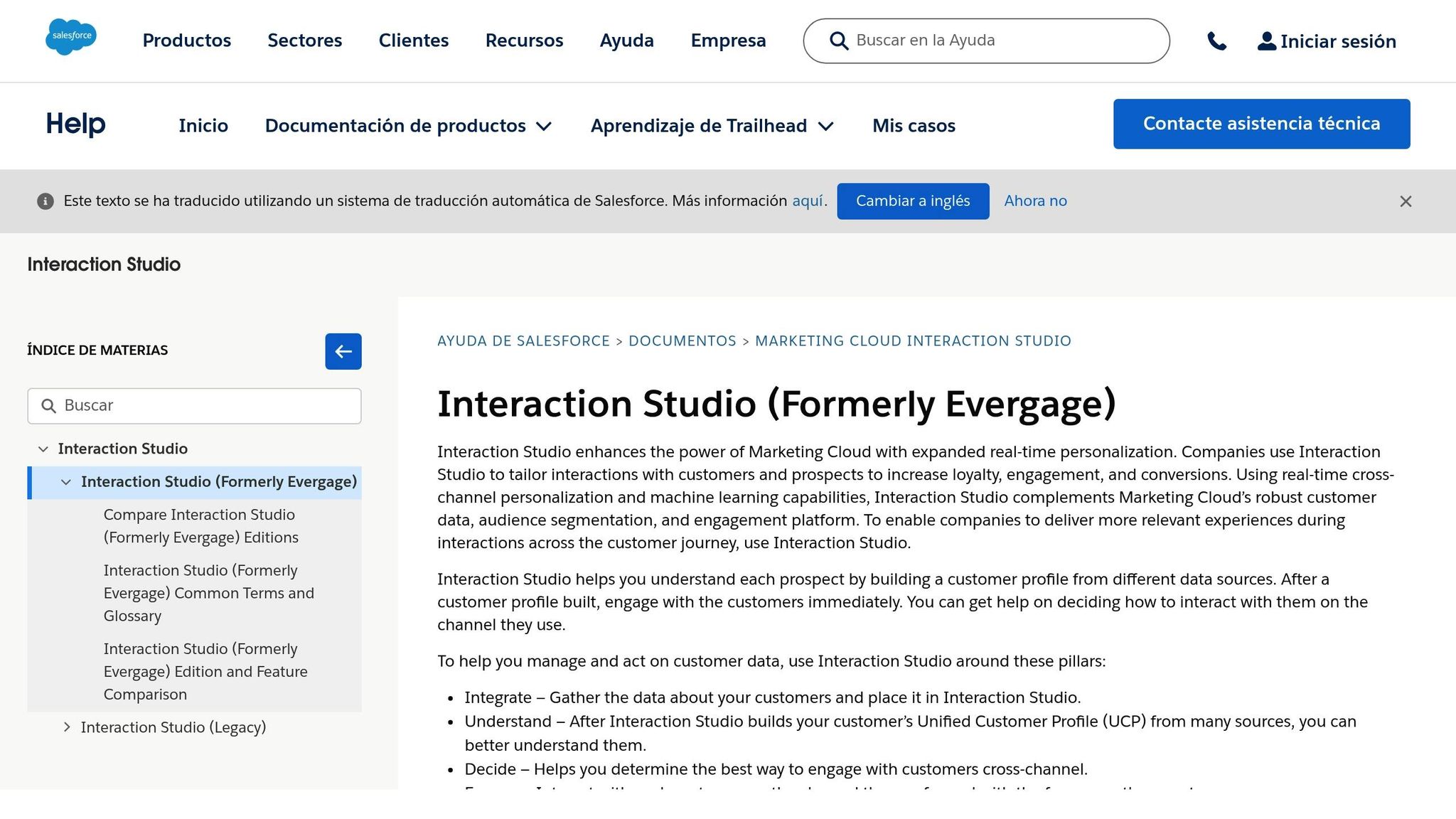
Evergage, now known as Salesforce Interaction Studio, provides advanced tools for real-time personalization across web, mobile, and email channels. It’s designed to work seamlessly within the Salesforce ecosystem, making it a strong choice for businesses already using Salesforce products.
Key Features
- Cross-Channel Journey Orchestration: Synchronizes customer interactions across web, mobile, and email.
- Machine Learning Engine: Delivers predictive analytics and next-best-action suggestions.
- CDP Integration: Connects directly with Salesforce Customer 360 for unified customer data.
- Real-Time Analytics: Offers immediate insights into customer behavior and campaign performance.
- Journey Builder: An intuitive visual tool for crafting personalized customer experiences.
These tools make it a go-to platform for real-time insights and enterprise-level personalization.
Enterprise Integration
Interaction Studio integrates with Salesforce’s Marketing, Commerce, Service, Sales, and Experience Clouds. This tight integration enables businesses to leverage Salesforce’s full suite of tools to enhance customer journeys.
Use Cases
With its robust features, Interaction Studio is ideal for creating tailored digital experiences. It’s particularly effective for tasks like improving product recommendations, increasing cross-sell opportunities, and simplifying customer support workflows.
Pricing Structure
Pricing is tiered. For exact details, you’ll need to contact Salesforce directly.
Limitations
While it offers powerful functionality and deep Salesforce integration, setting it up can be complex and resource-intensive. The platform’s focus on Salesforce products and its steep learning curve may make it less appealing for smaller businesses or those not using Salesforce.
3. Optimizely
Optimizely is another standout tool, offering a mix of A/B testing and real-time personalization to help businesses craft data-driven experiences across digital platforms.
Key Features
- Web Experimentation: A/B and multivariate testing to refine user experiences.
- Feature Flags: Gradual rollouts and targeted feature releases for better control.
- Full Stack: Server-side testing that works across various platforms.
- Data Platform: Tools for analytics and activating customer data.
- Content Management: Delivers dynamic content and personalized recommendations.
Enterprise Integration
Optimizely connects seamlessly with popular e-commerce platforms, CMS, and analytics systems using an API-first approach.
Key Use Cases
- E-commerce Personalization: Tailored product recommendations and customized category pages.
- Content Optimization: Automated testing and content delivery based on user behavior.
- Feature Management: Gradual rollouts of new features for specific user groups.
- Campaign Optimization: Real-time adjustments to marketing campaigns using performance data.
Pricing Structure
Optimizely offers three main plans:
| Plan | Features | Best For |
|---|---|---|
| Growth | Basic testing, Feature flags | Small to medium businesses |
| Business | Full personalization, Advanced analytics | Mid-market companies |
| Enterprise | Custom solutions, Dedicated support | Large organizations |
Platform Strengths
Optimizely stands out for its experimentation tools, backed by a strong statistical engine that helps teams make informed decisions. The visual editor is user-friendly, allowing non-technical staff to design and implement personalized experiences.
Limitations
Using the platform to its full potential requires substantial technical resources. Teams unfamiliar with experimentation and personalization may face a steep learning curve. Additionally, advanced features are locked behind higher-tier plans, which might not be affordable for smaller businesses.
4. Adobe Target
Adobe Target is a platform designed for businesses looking to create personalized marketing experiences. It offers different pricing levels to suit a variety of marketing needs.
Pricing Options
Adobe Target provides several pricing tiers, ranging from basic packages with core targeting and testing tools to more advanced plans tailored for large-scale enterprise needs. The cost depends on the scope of implementation, allowing businesses to choose a plan that aligns with their specific use cases.
Use Cases
Adobe Target supports a variety of personalization strategies, including:
- E-commerce Optimization: Improving online shopping with features like dynamic product recommendations and tailored category pages.
- Content Personalization: Delivering customized content across platforms to keep customers engaged.
- Cross-Channel Campaigns: Coordinating personalized marketing across websites, mobile apps, email, and other digital channels.
For businesses already using Adobe tools, Adobe Target integrates seamlessly, using customer data to create more tailored experiences.
5. Monetate
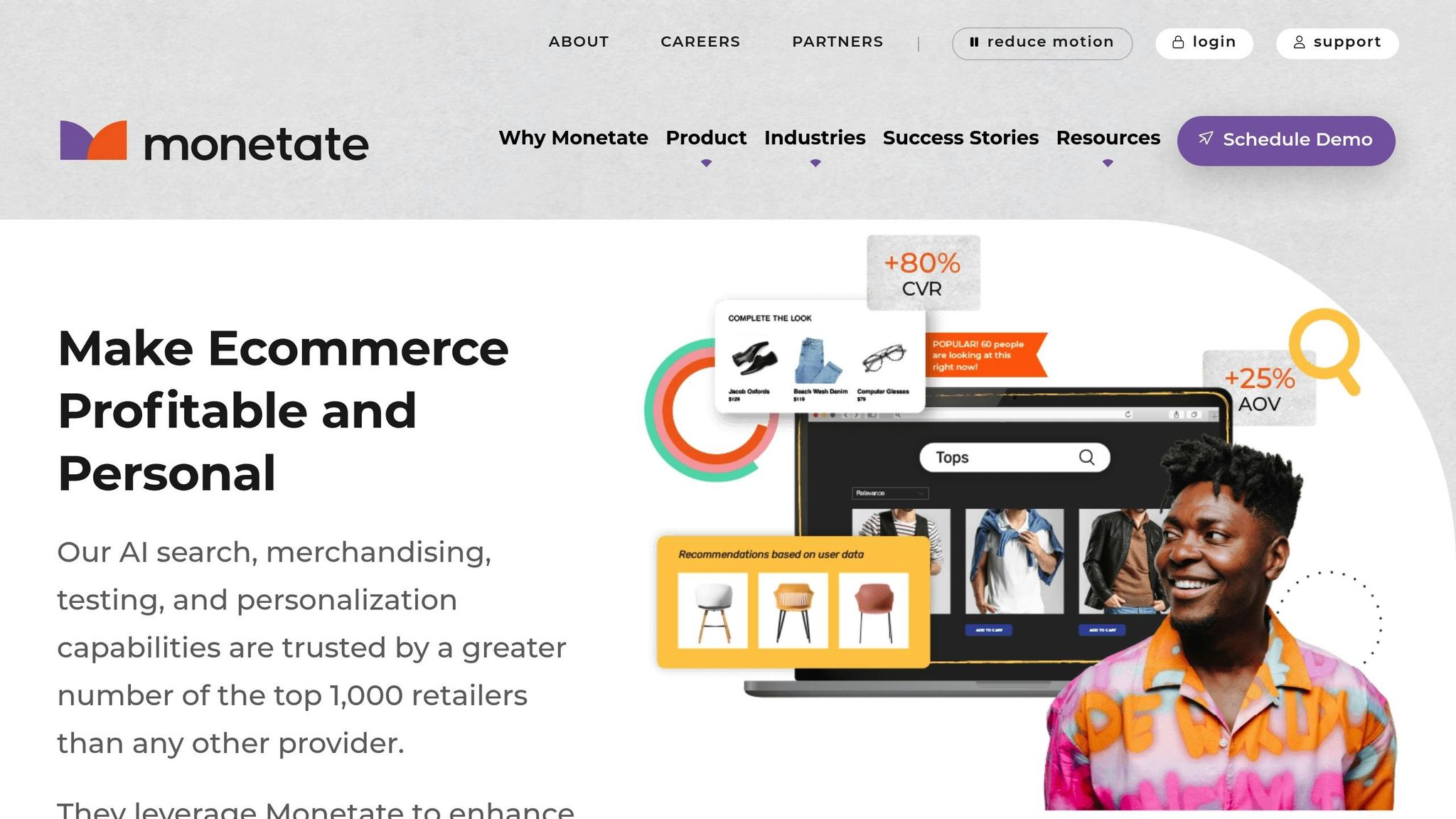
Monetate, now part of Kibo Commerce, uses AI to deliver personalized experiences in real-time by analyzing customer behavior across multiple channels.
Core Features
- AI-Powered Decisions: Processes customer data in milliseconds to provide tailored content, product recommendations, and offers.
- Cross-Device Consistency: Maintains unified customer profiles across desktop, mobile, and tablet for seamless personalization.
- Built-In Testing Tools: Offers A/B and multivariate testing to refine and improve personalization strategies.
How It’s Used in Retail and E-Commerce
Monetate is popular among retailers and e-commerce companies for creating targeted customer experiences that deliver measurable results:
| Feature | Description |
|---|---|
| Real-Time Segmentation | Groups customers dynamically based on behavior, demographics, and purchase history. |
| Product Recommendations | Suggests products using AI-driven insights from browsing and purchase data. |
| Dynamic Content | Adjusts content automatically based on user profiles and attributes. |
| Campaign Management | Manages personalization efforts across channels from one central platform. |
Measuring Success
The platform includes detailed analytics to track and measure performance:
- Conversion Rates: Analyze improvements in conversions across customer groups.
- Revenue Insights: Track how personalization impacts sales and order values.
- Engagement Metrics: Monitor stats like time spent on site, pages viewed per session, and repeat visits.
Easy Setup and Integration
Monetate is designed for quick implementation, typically taking 2-4 weeks. It offers multiple integration options to suit different technical environments:
- JavaScript tags
- API integrations
- Server-side setups
With its straightforward setup and flexible integration choices, Monetate stands out as a strong contender in the personalization space.
6. Segment
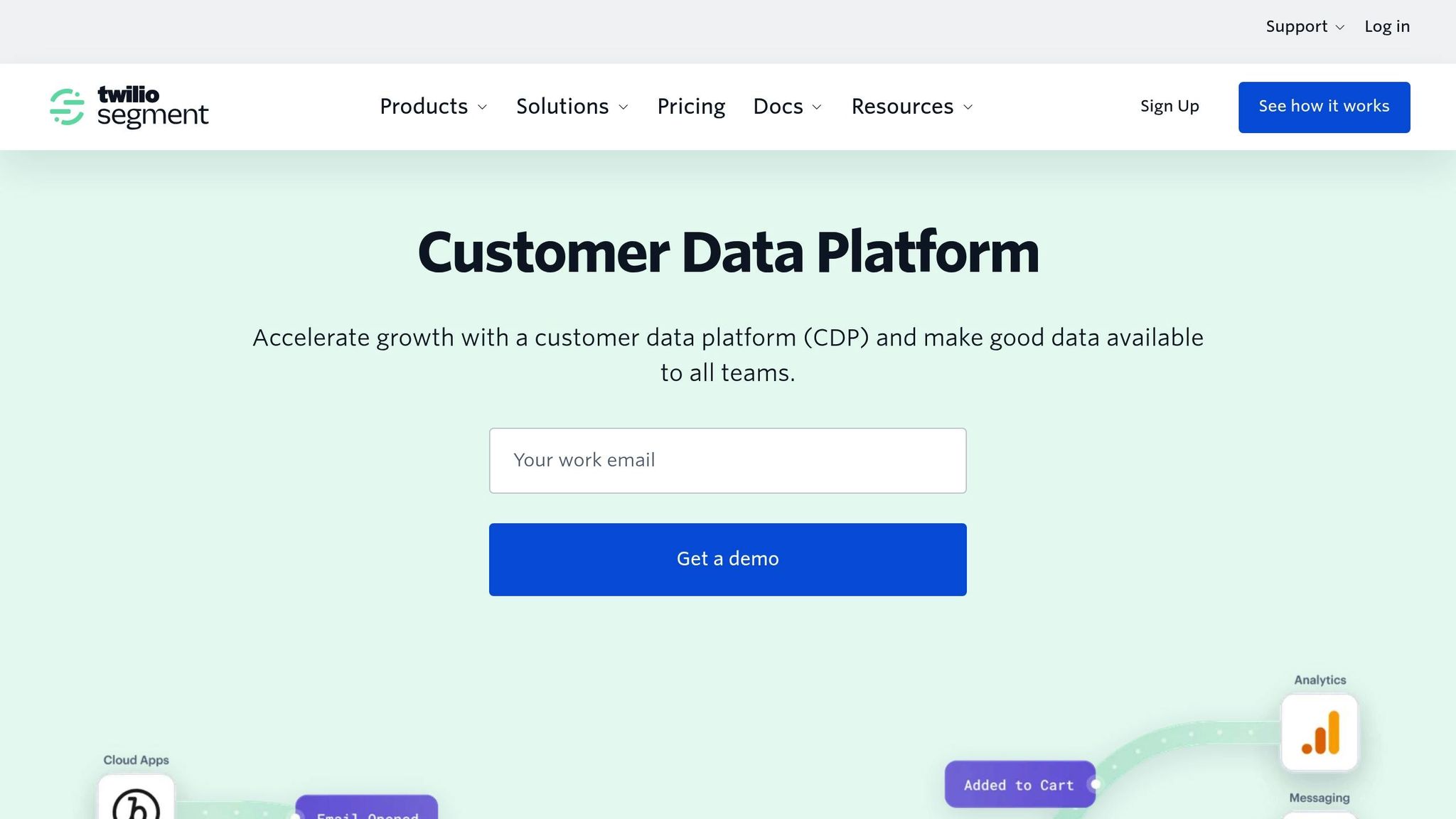
Segment is a CDP (Customer Data Platform) designed to bring together customer data for real-time personalization.
Key Features
- Real-Time Data Collection: Gathers interactions across web, mobile, and server platforms.
- Identity Resolution: Combines customer profiles from different devices and channels.
- Data Governance: Maintains data quality and ensures privacy compliance.
Integration Options
Segment connects with over 300 tools, simplifying workflows across analytics, marketing, data warehousing, and CRM systems.
| Integration Type | Features | Use Cases |
|---|---|---|
| Analytics Tools | Real-time data sync | Tracking customer journeys |
| Marketing Platforms | Audience syncing | Personalizing campaigns |
| Data Warehouses | Automated ETL | Analyzing customer data |
| CRM Systems | Bi-directional sync | Boosting sales engagement |
Personalization Layers
Segment’s personalization framework operates through three main layers:
- Data Collection Layer
Collects data via client-side, server-side, mobile platforms, and cloud connectors. - Processing Layer
Handles event validation, identity resolution, data transformation, and privacy filtering. - Activation Layer
Powers personalized website content, targeted emails, better mobile experiences, and precise ad targeting.
This layered system integrates smoothly with performance monitoring tools.
Performance Monitoring Tools
Segment includes several monitoring features to ensure smooth operations:
- Data Flow Monitoring: Keeps track of event delivery and latency.
- Schema Validation: Checks for consistency across data sources.
- Error Tracking: Notifies users about data collection issues.
- Usage Analytics: Evaluates implementation and adoption levels.
Deployment
Segment is available as a cloud-based service, making setup straightforward and efficient.
sbb-itb-d6d4d8b
7. Personalize by AWS
Amazon Web Services (AWS) Personalize is designed for omnichannel marketing, offering machine learning-powered personalization to deliver real-time recommendations and tailored experiences across multiple platforms.
Core Features
AWS Personalize focuses on three main areas to enhance real-time personalization:
- Personalized Recommendations: Suggests products, content, or services based on user behavior, item details, and contextual information.
- Real-Time Updates: Adjusts user preferences and recommendations instantly as new interactions happen.
- Omnichannel Consistency: Ensures a seamless personalized experience across websites, mobile apps, and other channels.
Integration Options
AWS Personalize provides several ways to integrate, letting businesses choose what works best for their setup. Options include direct API calls, AWS SDKs, or using the AWS Management Console. These methods make it easier to harness the power of its machine learning capabilities.
Machine Learning Models
The service uses advanced models to predict user interactions, identify similar items, and reorder collections based on individual preferences.
Monitoring and Testing
AWS Personalize supports real-time performance tracking, monitors recommendation quality, and includes A/B testing tools to refine results.
Data Security
Security is a priority for AWS Personalize, which includes:
- Encryption: Protects data both at rest and during transmission.
- Access Control: Uses detailed IAM policies to regulate access securely.
- Regulatory Compliance: Meets major standards like GDPR and CCPA.
Its infrastructure is designed to maintain high performance while keeping data protected.
Resource Management and Cost
AWS Personalize automatically scales resources, updates models with fresh data, and uses a pay-as-you-go pricing model to help manage costs effectively.
8. Insider
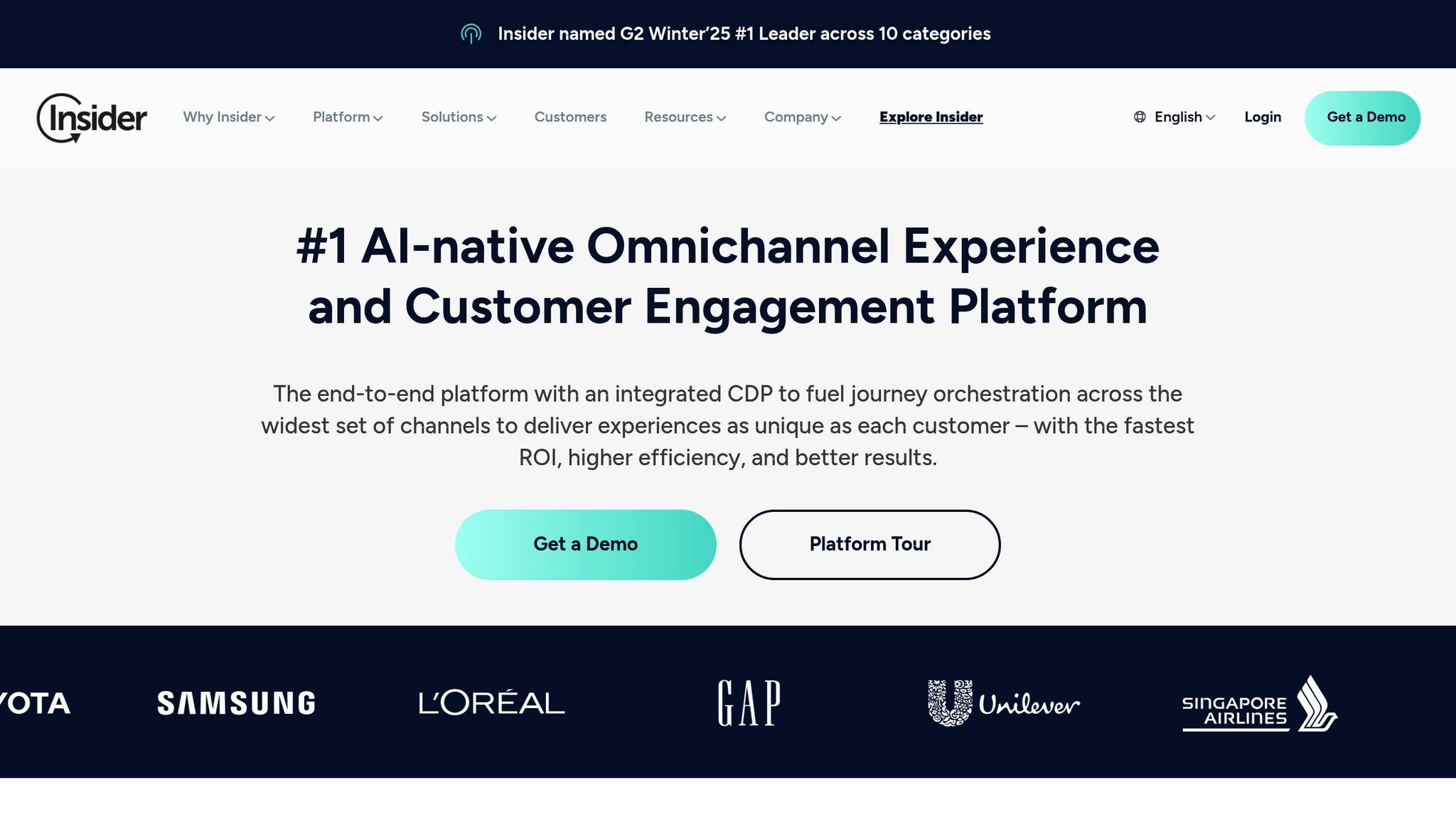
Insider is a platform designed to create personalized experiences across multiple channels, including web, mobile, email, and messaging. It brings customer data together in one place and enables real-time, tailored campaigns.
Key Features
Cross-Channel Journey Coordination
- Personalizes interactions across web, apps, email, SMS, and WhatsApp.
- Combines data from behavior, transactions, and demographics into unified profiles.
- Ensures smooth transitions between channels without losing context.
AI-Driven Insights
Insider uses AI to:
- Estimate customer lifetime value.
- Gauge the likelihood of purchases.
- Determine the best times to engage.
- Predict potential customer churn.
Real-Time Personalization Tools
Web Customization
- Adjusts content dynamically based on user behavior.
- Provides smart product recommendations.
- Includes tailored pop-ups.
- Offers A/B testing to refine strategies.
Mobile Personalization
- Sends tailored in-app messages and push notifications.
- Adapts app interfaces to match user preferences.
- Tracks user journeys with mobile analytics.
Integration for Enterprises
Insider supports seamless integration with tools like REST API and pre-built e-commerce connectors:
- Works with Customer Data Platforms (CDPs).
- Allows custom data imports and exports.
Analytics and Reporting
The platform includes advanced analytics tools:
- Real-time performance dashboards.
- Mapping of customer journeys.
- Revenue tracking and attribution.
- Conversion funnel analysis.
These tools enhance its personalization capabilities, making it a strong option for businesses.
Data Protection and Security
Insider prioritizes data security with compliance measures such as:
- GDPR and CCPA adherence.
- SOC 2 Type II certification.
- ISO 27001 standards.
- Regular security audits and penetration tests.
This ensures customer data is handled with care and stays secure.
9. BlueConic
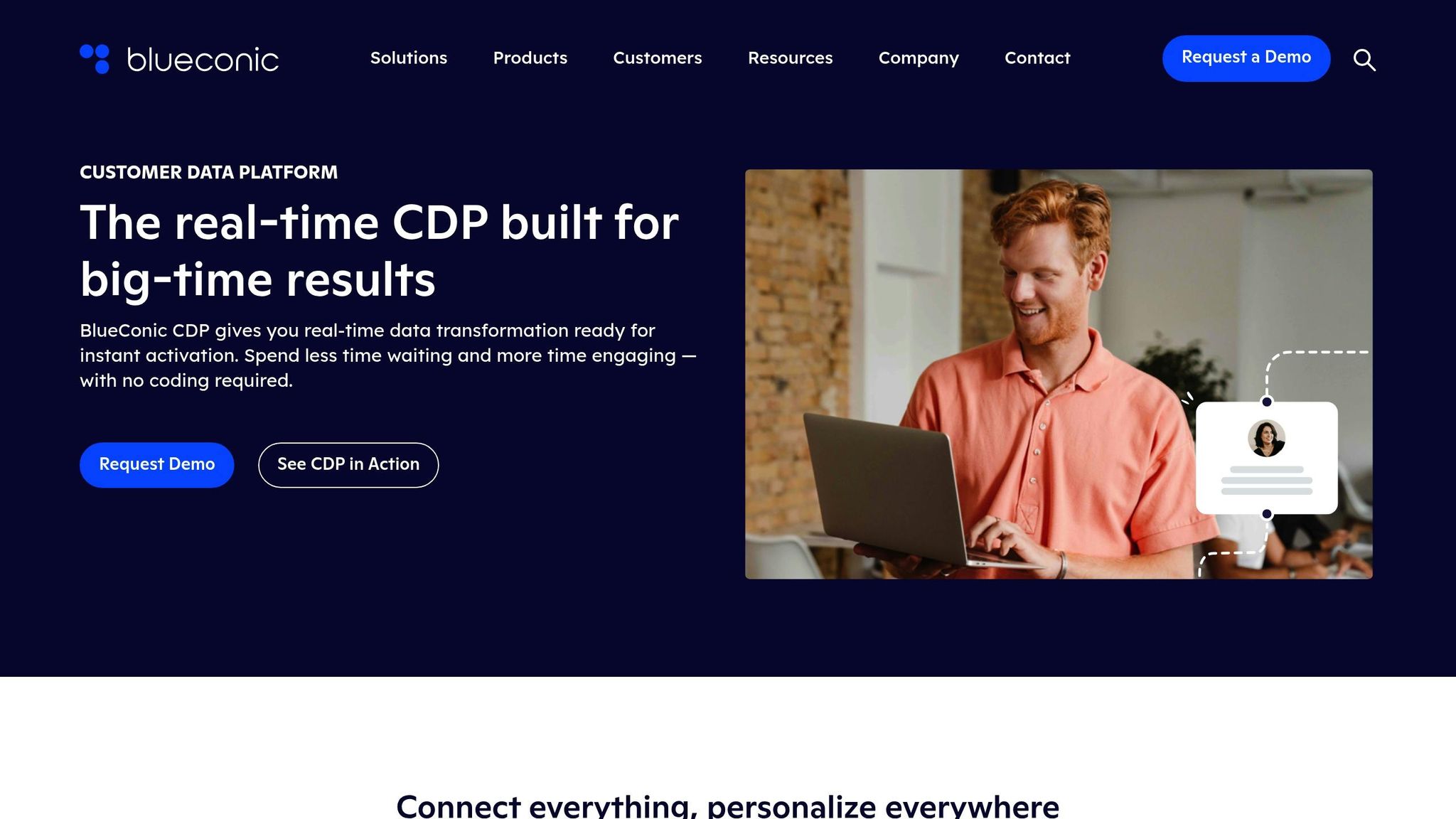
BlueConic brings together customer data from various sources into dynamic, unified profiles. This allows businesses to deliver personalized experiences in real-time across multiple digital platforms. By streamlining data integration, BlueConic helps marketers create consistent and tailored interactions across all channels.
10. Certona
Certona is a platform designed to deliver personalized customer experiences in real time. By leveraging AI and machine learning, it offers tailored interactions across various channels. Its combination of predictive analytics and instant personalization makes it a strong choice for businesses aiming to enhance customer engagement.
Key Features
- Predictive Analytics: Analyzes customer behavior to anticipate future actions using AI.
- Cross-Channel Personalization: Aligns customer experiences across multiple touchpoints.
- Real-Time Optimization: Updates content and recommendations instantly based on user activity.
- Customer Journey Mapping: Monitors and improves the entire customer lifecycle.
- Advanced Testing: Includes A/B and multivariate testing for ongoing improvements.
Supported Channels
Certona supports personalization across a wide range of platforms, such as:
- E-commerce websites
- Mobile apps
- Email campaigns
- In-store digital displays
- Point-of-sale systems
Integration Options
Certona offers several ways to integrate into your existing systems:
- RESTful APIs
- JavaScript implementation
- Native mobile SDKs
- Custom middleware solutions
Use Cases
Businesses use Certona for various purposes, including:
- Personalized product recommendations
- Tailored content delivery
- Optimizing search results
- Customizing email campaigns
- Enhancing in-store digital interactions
Pricing Model
The pricing for Certona depends on factors like:
- Website traffic volume
- Number of active channels
- Customization requirements
- Implementation complexity
For detailed pricing, businesses need to contact Certona directly.
Advantages and Limitations
Pros:
- Strong cross-channel personalization capabilities
- AI-powered predictions for better targeting
- Flexible integration options
- Real-time updates for dynamic customer engagement
Cons:
- Implementation can be complex
- Full features may come at a higher price
- Requires technical expertise to manage effectively
Up next, we’ll compare all ten platforms to help you decide which one aligns best with your business goals.
Features and Pricing Comparison
When evaluating platforms, focus on these important factors:
- Core Capabilities: Look for features like AI-driven analytics, A/B testing, custom audience segmentation, and real-time data processing.
- Pricing Structure: Costs often depend on the size of your organization and the scope of use. Check vendor resources or schedule demos for detailed pricing information.
- Implementation Complexity: Consider how long setup takes and the technical expertise required. Some tools are quick to deploy, while others involve more intricate integration processes.
- Industry Fit: Make sure the platform aligns with your marketing needs, whether you’re in e-commerce, B2B, or digital services.
- Support and Training: Verify the availability of customer support, technical help, and training programs to ensure smooth adoption.
- Technical Requirements: Determine if the platform demands significant developer resources or if it’s more of a plug-and-play solution.
These criteria can help you choose a platform that matches your business goals and operational needs.
How to Select a Personalization Tool
The key to picking the right personalization tool is ensuring it works smoothly with your existing marketing setup. Start by evaluating your current technical infrastructure, including the integration needs and data sources. This will help you avoid compatibility problems and keep things running efficiently. Use this assessment to narrow down your options based on the integration features we’ll discuss in the next section.
Conclusion
Real-time personalization tools help businesses create tailored customer experiences. These platforms use AI-powered decision-making, smooth delivery across multiple channels, and detailed audience segmentation. When selecting a personalization tool, make sure it fits with your current technology setup and meets your marketing goals.
Related posts
- 7 AI Marketing Tools That Boost ROI in 2025
- Top Marketing Automation Tools for 2025
- How AI Powers Cross-Channel Personalization
- AI for Personalized Landing Pages: How It Works


